
Introduction: A Better Way to Fix Flooded Roads
Communities across the U.S. face a recurring challenge: how to fix flooded dirt roads that repeatedly wash out after heavy rain. Traditional road repair methods often fail, leading to rising maintenance costs and ongoing frustration for residents.
Grady County, Georgia, recently implemented a cost-effective road flooding solution on Lower Cairo Road, one that combines engineering innovation with sustainable materials. By using recycled tires in road construction, Grady County, Georgia created a durable and long-lasting fix for a persistent problem.
The Problem: Chronic Flooding and Road Washouts
For years, Lower Cairo Road experienced severe flooding during storms. Heavy rainfall would:
- Wash out sections of the roadway
- Damage the road base
- Require repeated repairs
These conditions made it clear that conventional fixes were not enough. Grady County, Georgia needed a smarter approach to flood-prone road repair, one that addressed the root cause rather than temporary surface damage.
The Solution: Mechanical Concrete Road Stabilization
To solve the issue, Grady County, Georgia turned to Mechanical Concrete, an innovative road stabilization method designed for durability and performance.
What Is Mechanical Concrete?
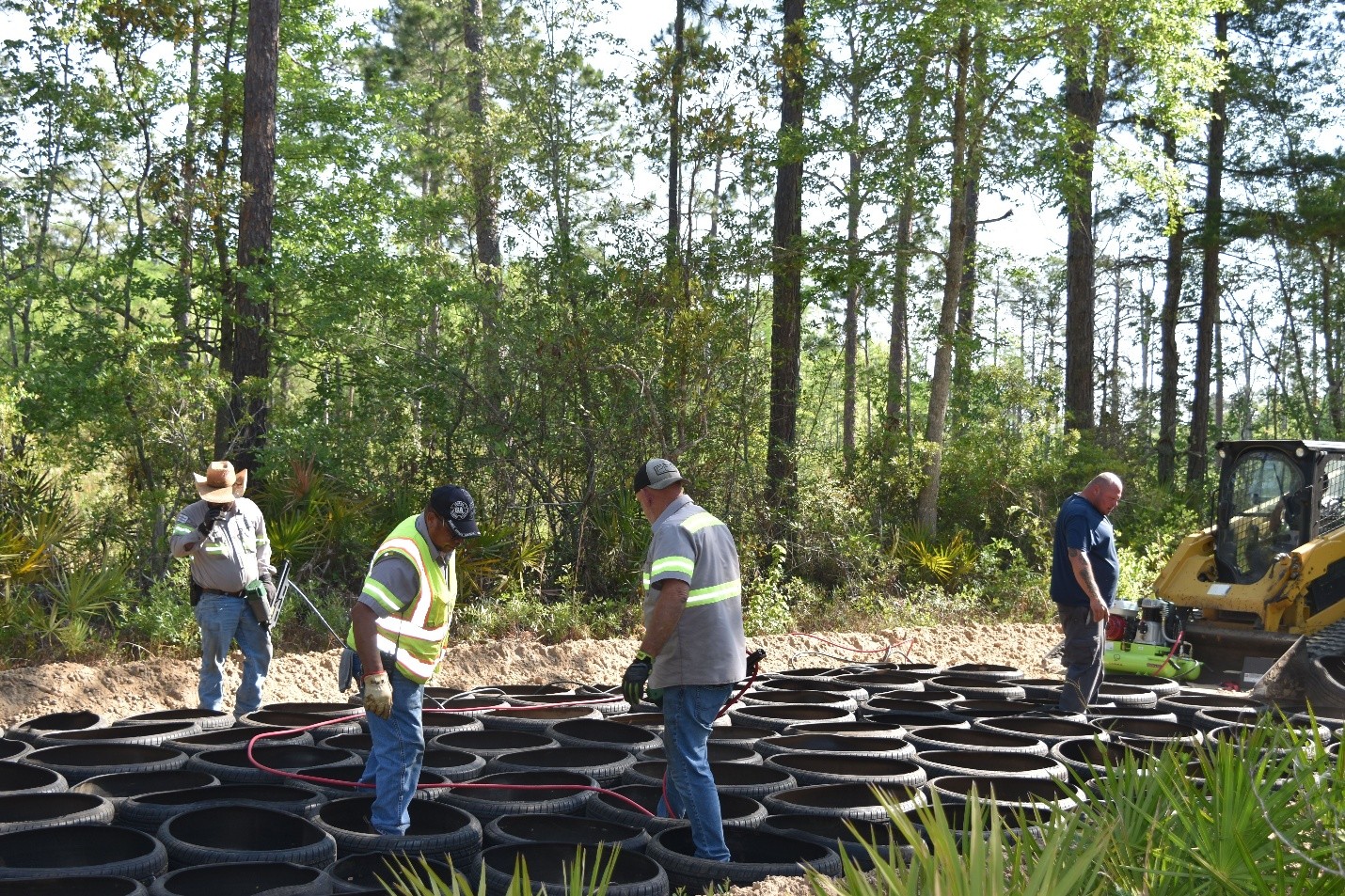
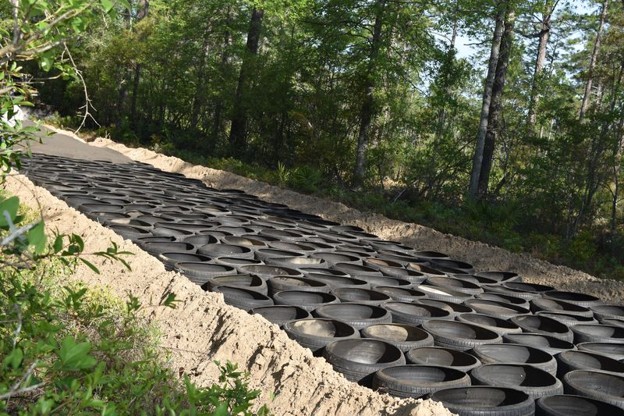
Mechanical Concrete is a system that uses recycled tire cylinders filled with aggregate to create a strong, flexible, load-bearing foundation for roads.
How Mechanical Concrete Works
- Scrap tires are processed into cylindrical units
- The cylinders are connected to form a grid structure
- Each unit is filled with aggregate material
- The system distributes weight evenly and prevents erosion
In this project, the cylinders were filled with reclaimed asphalt pavement (RAP), further enhancing sustainability.
Project Overview: Grady County, Georgia’s Road Flooding Solution
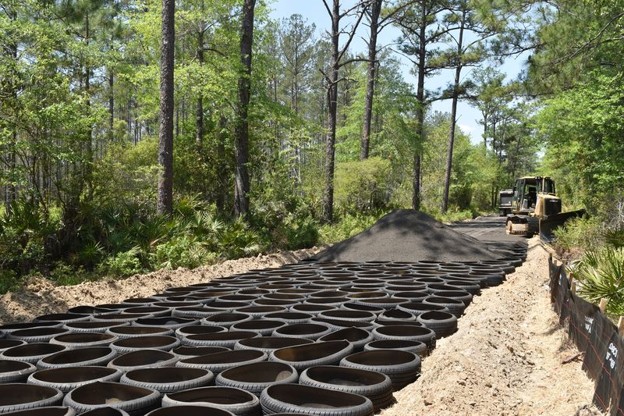
Here’s a snapshot of the Lower Cairo Road project:
Location: Grady County, Georgia
Length: 880 linear feet
Width: 18 feet
Elevation Increase: 12 inches
Materials Used: 3,300 recycled scrap tire cylinders and Reclaimed Asphalt Pavement (RAP)
By raising the roadway and reinforcing its base, the county successfully implemented a long-term solution for road flooding.
Why Recycled Tires Work for Flooded Roads
Using recycled tires in road construction offers several advantages:
- Improved Drainage and Elevation: Raising the road helps prevent water accumulation, reducing flood risk.
- Enhanced Structural Stability: The interlocking system distributes loads effectively, minimizing washouts.
- Sustainability Benefits:
- Diverts thousands of tires from landfills
- Reduces demand for new raw materials
- Promotes circular economy practices
- Cost-Effective Maintenance: This flood-prone road repair method reduces the need for repeated fixes, saving time and money.
A Scalable Road Flooding Solution
Grady County’s success demonstrates how small municipalities can adopt innovative solutions without exceeding tight budgets.
This approach is ideal for:
- Rural road networks
- Low-lying flood-prone areas
- Budget-conscious infrastructure programs
By focusing on how to fix flooded roads with long-term durability in mind, counties can improve resilience and reduce costs.
Key Takeaways
- Mechanical Concrete provides a proven road stabilization method
- 3,300 recycled tires were repurposed in this project
- Raising the roadway helped eliminate repeated flooding issues
- Recycled materials reduce environmental impact
- This approach offers a cost-effective road flooding solution for communities
Frequently Asked Questions (FAQs)
Q: How do you fix flooded roads permanently?
A: The most effective way to fix flooded roads is to raise the elevation and improve the road base using durable materials like Mechanical Concrete and aggregate fill.
Q: What is Mechanical Concrete in road construction?
A: Mechanical Concrete is a system that uses recycled tire cylinders filled with aggregate to create a stable, load-bearing road foundation.
Q: Why are recycled tires used in road construction?
A: Recycled tires provide strength, flexibility, and sustainability benefits while reducing landfill waste.
Q: Is this method cost-effective for small counties?
A: Yes. It reduces long-term maintenance costs and uses locally available recycled materials.
Q: Can this solution be used in other locations?
A: Absolutely. This road flooding solution is scalable and can be implemented in many flood-prone regions.
Visit https://timesenterprise.com/2026/06/09/grady-county-turns-scrap-tires-into-a-flood-fix-on-lower-cairo-road/ to read the full Thomasville Time-Enterprise article.